Shift Models: 2, 3, 4 and 5-Shift Systems
All common shift models clearly explained: from 2-shift models to 4-shift continuous operation models. With practical examples and templates for medical practices.
Table of Contents
Choosing the right shift model is a central question of personnel planning for many medical practices. Whether 2-shift system, 3-shift system, 4-shift model 7 days, or continuous shift operation – each model has its own advantages and disadvantages. In this comprehensive guide, you'll learn which shift models exist, how they work, and which one best fits your practice.
The Key Points at a Glance
- The 4-shift model 7 days enables continuous coverage with balanced workload
- Continuous shift operation systems are ideal for practices with long opening hours
- 2-shift system examples are suitable for smaller practices with early and late shifts
- 4-shift continuous models guarantee optimal staff coverage around the clock
- The choice of shift model depends on practice size, opening hours, and staff numbers
What Are Shift Models and Why Are They Important?
Shift models are systematic working time arrangements where employees work in defined time periods to ensure continuous coverage. In the modern medical practice, shift models are indispensable for bringing patient care, employee satisfaction, and operational efficiency into harmony.
A shift model defines when which employees work. Employees rotate through different shifts to ensure fair distribution of early, late, and if applicable night shifts. The most important basic principles are predictability, fairness, and compliance with legal requirements.
In medical practices, well-thought-out shift models ensure patients are optimally cared for at all opening times. Especially with extended office hours or emergency coverage, professional shift models are decisive for smooth practice operations.
The 2-Shift Model: Early and Late Shift
The 2-shift system is the simplest and most widely used shift model in medical practices. It divides the workday into two main shifts: early shift and late shift.
2-Shift System Example
A 2-shift system example typically looks like this:
- Early shift: 7:00 AM - 3:00 PM
- Late shift: 1:00 PM - 9:00 PM
The overlap at lunchtime enables a smooth handover process and optimally covers main office hours.
Advantages of the 2-Shift System:
- Easy to plan and manage
- Clear structures for employees
- Suitable for practices with normal opening hours
- Low complexity in scheduling
Disadvantages:
- No coverage for night shifts
- Limited flexibility
- Not suitable for 24/7 operation
For smaller medical practices with classic opening hours of 8 AM to 6 PM, the 2-shift system is ideal. It enables complete coverage without excessive personnel costs and can be implemented even with few employees.
The 3-Shift Model: Round-the-Clock Care
The 3-shift model extends the 2-shift system with a night shift, enabling round-the-clock care. This model is mainly used in larger medical facilities.
Typical shift times in the 3-shift model:
- Early shift: 6:00 AM - 2:00 PM
- Late shift: 2:00 PM - 10:00 PM
- Night shift: 10:00 PM - 6:00 AM
Each shift typically lasts eight hours, with handovers needing to be precisely timed. The 3-shift model is particularly suitable for emergency departments in practice networks, medical care centers (MVZ), and practices with on-call services.
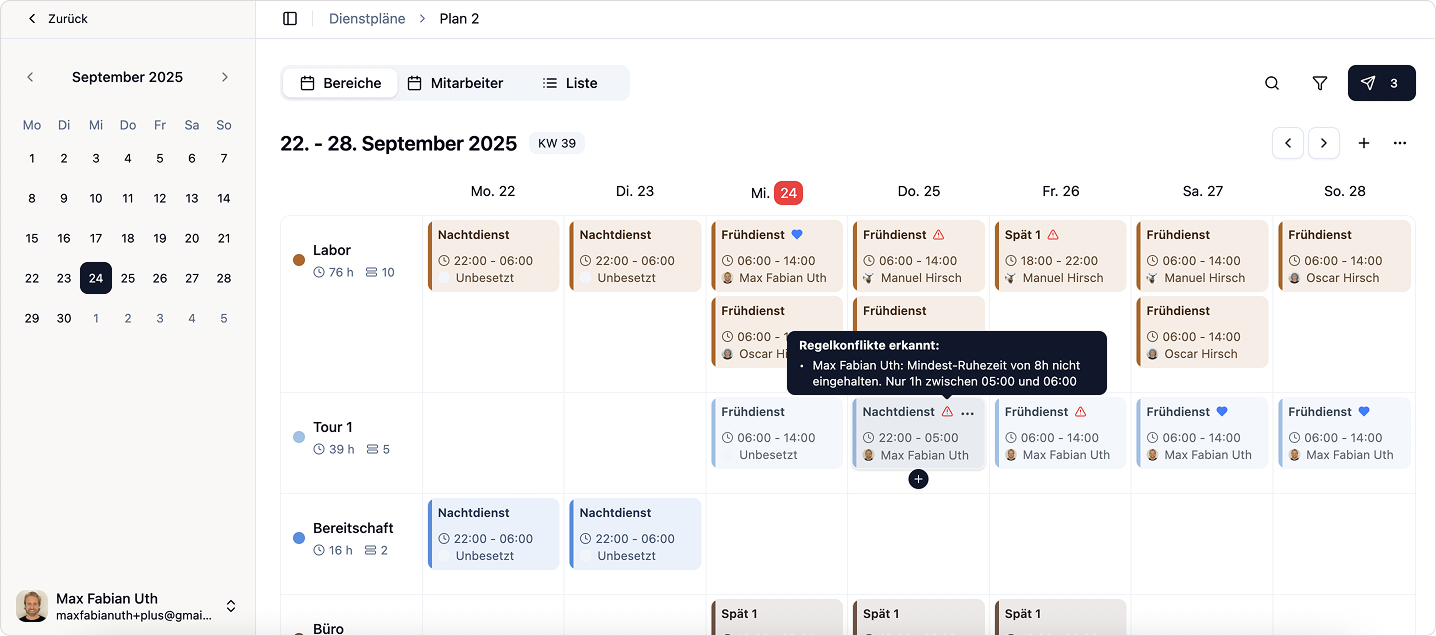 With medishift, you plan all shift models digitally and efficiently. Try it for free!
The 4-Shift Model 7 Days: The Continuous Operation Standard
The 4-shift model 7 days, also known as continuous shift operation, is one of the most sophisticated and fairest shift systems. It ensures continuous 24/7 coverage with simultaneously balanced workload for employees.
What is Continuous Shift Operation?
A continuous shift operation means that operations are maintained 24 hours a day, 7 days a week. Unlike semi-continuous systems, there are no operation-free times. The 4-shift model 7 days divides the workforce into four teams for this purpose.
Structure of the 4-Shift Model 7 Days System
With 4-shift continuous models, four teams work in rotation:
- Team A: Early shift (Week 1)
- Team B: Late shift (Week 1)
- Team C: Night shift (Week 1)
- Team D: Off (Week 1)
In the following week, all teams rotate one position. This way, every team regularly goes through all shifts and has predictable time off.
4-Shift System Example from Practice
A concrete 4-shift system example for a larger medical practice or MVZ:
Week 1:
- Team A: Mon-Sun Early shift (6 AM - 2 PM)
- Team B: Mon-Sun Late shift (2 PM - 10 PM)
- Team C: Mon-Sun Night shift (10 PM - 6 AM)
- Team D: Free week
Week 2: Rotation – each team moves one shift forward
Advantages of 4-Shift Models 7 Days
The 4-shift continuous models offer numerous advantages:
- Complete 24/7 coverage
- Fair distribution of night and weekend shifts
- Predictable time off for employees
- Reduced overtime
- Even workload distribution
Challenges with 4-Shift Continuous Models
Implementing 4-shift continuous models requires:
- Sufficient staff (at least 20-24 employees)
- Precise planning and coordination
- Clear communication structures
- Digital support through shift planning software
The 5-Shift Model: Maximum Flexibility
The 5-shift model offers the highest flexibility and shortest working hours per shift. It's particularly suitable for operations with high workload.
With 5-shift models, five teams are formed, each working shorter shifts of about 6 hours. Shorter shifts mean less fatigue, higher concentration during working hours, and better work-life balance.
The 5-shift model is mainly used in intensive care units of larger practice networks, high-frequency emergency practices, and specialized medical centers.

Try Medishift for free now!
- Modern duty planning in just minutes
- Automated workflows for your practice
- Forever free for up to 10 employees
Shift Models in Medical Practice: Practical Implementation
Transferring classic shift models to medical practice operations requires special adaptations. Medical practices have different requirements than inpatient facilities: clear office hours with appointment scheduling, different patient frequencies depending on time of day, and administrative tasks outside office hours.
Adaptation to Practice Size and Type
Small Single Practices:
- 2-shift system example with early and late shift
- 3-4 employees sufficient
- Flexible handling possible
Group Practices:
- 3-shift model for extended opening hours
- 6-10 employees required
- Structured planning necessary
Medical Care Centers:
- 4-shift model 7 days for continuous care
- 20+ employees
- Professional shift planning software indispensable
Advantages and Disadvantages of Various Shift Models Compared
2-Shift System vs. 4-Shift Model 7 Days
2-Shift System:
- Easy to plan and implement
- Low personnel requirements
- No night coverage
- Limited flexibility
4-Shift Model 7 Days:
- Complete 24/7 coverage
- Fair load distribution through continuous shift operation
- High personnel requirements
- Complex planning required
Employee Satisfaction and Work-Life Balance
The choice of shift model directly influences employee satisfaction. Continuous shift operation systems offer predictable time off, regular rotation prevents one-sided burden, and considering employee wishes increases acceptance.
Legal Aspects of Shift Work
Implementing shift models must comply with legal frameworks. The Working Time Act sets clear limits:
- Maximum daily working time: 8 hours (up to 10 hours with compensation)
- Minimum rest time: 11 hours between shifts
- Maximum weekly working time: 48 hours on average
- Break regulations: at least 30 minutes for 6-9 hours of work
With 4-shift model 7 days and continuous shift operation systems, these requirements must be particularly carefully observed. Special regulations apply for night work, such as occupational health examinations and supplements or time off in lieu.
More about legal foundations can be found in our article about employee scheduling rights.
Shift Planning with Digital Tools
Modern shift planning software makes implementing complex shift models significantly easier. Especially with 4-shift continuous models, digital support is indispensable.
Advantages of Digital Shift Planning:
- Automatic consideration of legal requirements
- Real-time conflict detection
- Mobile availability for all employees
- Integrated vacation planning
- Automatic notifications for changes
- Transparent communication
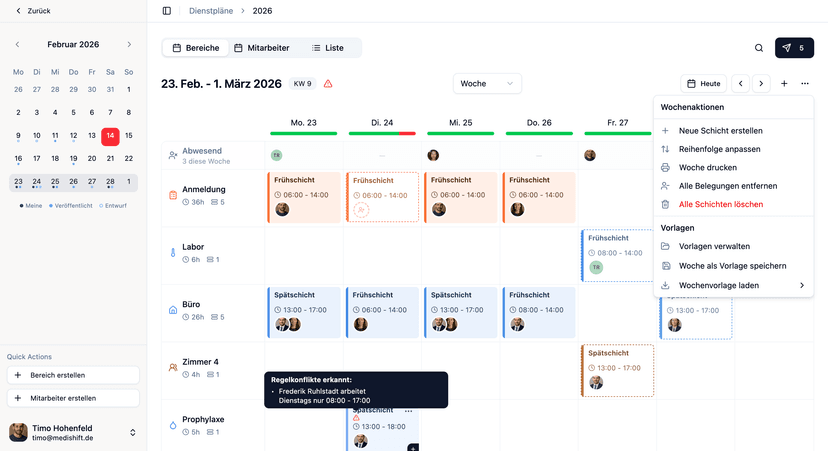
medishift is a shift planning software specially developed for medical practices that supports all common shift models – from simple 2-shift system examples to complex 4-shift continuous models. With structured weekly planning, rule-based warnings and optimized practice scheduling, implementation becomes child's play.
Frequently Asked Questions About Shift Models
Conclusion: The Right Shift Model for Your Practice
Choosing the appropriate shift model is a strategic decision with far-reaching effects on practice organization, employee satisfaction, and patient care.
Summary of Key Points:
- The 2-shift system is suitable for small practices with normal opening hours
- The 4-shift model 7 days offers the fairest solution for continuous operation as continuous shift operation
- 4-shift continuous models require sufficient staff and professional planning
- Digital tools like medishift significantly simplify implementing all shift models
When choosing the right shift model, consider opening hours, staff numbers, practice type, and employee wishes. Test digital planning tools like medishift for free and optimize your practice organization – for the benefit of your team and your patients.