Practice Scheduling: A 7-Step Shift Plan Guide
Practice scheduling in 7 steps: staffing needs, qualifications, shift types. Includes the German limits of 10 hours work and 11 hours rest per day.

Table of Contents
Practice scheduling can be a real challenge. As a practice manager, you know the drill: Every month you have to organize shift planning, consider everyone's wishes, and simultaneously ensure the practice runs smoothly. Thoughtful workforce planning is the key to success.
Key Takeaways
- Practice scheduling is crucial for practice success
- Modern scheduling software for practices saves time and reduces errors
- Shift planning in the practice requires clear communication and flexibility
- Schedule creation tips help optimize workflows
- Scheduling & employee satisfaction go hand in hand
Creating a Schedule: Step-by-Step Guide
Here's how to create a schedule for your practice in 7 steps:
- Determine staffing needs: Analyze your patient volume by weekday and time of day. Use the methods from our guide on workforce capacity planning to calculate actual demand.
- Record employee master data: Weekly working hours (full-time/part-time), qualifications (X-ray license, lab, DMP care), availability, and preferred shifts.
- Define shift types: Determine which shifts exist – e.g., early shift, late shift, on-call duty.
- Check legal requirements: Observe employee rights regarding schedules and the MFA collective agreement – maximum 10 hours per day, minimum 11 hours rest time.
- Consider vacation times: Already approved vacations from vacation planning must be reflected in the schedule.
- Create and optimize the plan: Use scheduling software to automatically detect conflicts. Modern solutions like medishift warn about rule violations, double bookings and unavailabilities in real time.
- Inform the team: Communicate the plan at least 2 weeks in advance and enable shift swaps via the app.
Why Workforce Planning in Medical Practices is So Important
Efficient workforce planning is the heart of every successful practice. Without thoughtful scheduling, nothing works - neither patient care nor team satisfaction.
The Fundamentals of Successful Scheduling
Practice scheduling begins with proper preparation. You need to know your team's working hours, consider vacation times, and simultaneously ensure all important positions are covered. Good practice scheduling considers not only legal requirements but also the individual needs of your team.
Legal Aspects of Scheduling
When creating schedules, you must observe various legal frameworks. Labor law prescribes how long your employees may work, which breaks must be taken, and what rest periods between shifts must look like. Professional scheduling software for practices helps you automatically verify these requirements.
Impact on Practice Efficiency
Poor practice scheduling costs you not only nerves but also money. Overtime, last-minute substitutions, and dissatisfied employees directly affect your practice revenue. Thoughtful workforce planning, on the other hand, ensures smooth operations and satisfied patients.
Shift Planning in the Practice: The Biggest Challenges
Shift planning in the practice brings new challenges every day. As a practice manager, you face the task of balancing your team's needs with practice requirements. There are some typical pitfalls that can make your life difficult.
Staff Shortages and Vacation Planning
Especially during summer months, shift planning becomes a real challenge. When multiple employees want vacation at the same time, you have to get creative. Good scheduling software for practices helps you identify bottlenecks early and find alternative solutions.
Emergency Services and On-Call Duty
Shift planning becomes particularly complicated when emergency and on-call services are involved. You must ensure qualified staff is always available, even outside regular opening hours. Thoughtful practice scheduling considers these special requirements.
Communication Between Shifts
One of the biggest challenges in shift planning is communication between different shifts. Important information must be reliably passed on so patient care functions seamlessly. Modern scheduling software for practices often offers integrated communication tools that facilitate this process.
Scheduling Software for Practices: Modern Solutions
The days when you organized practice scheduling with Excel spreadsheets and paper chaos are over. Modern scheduling software for practices makes workforce planning not only easier but also significantly more efficient.
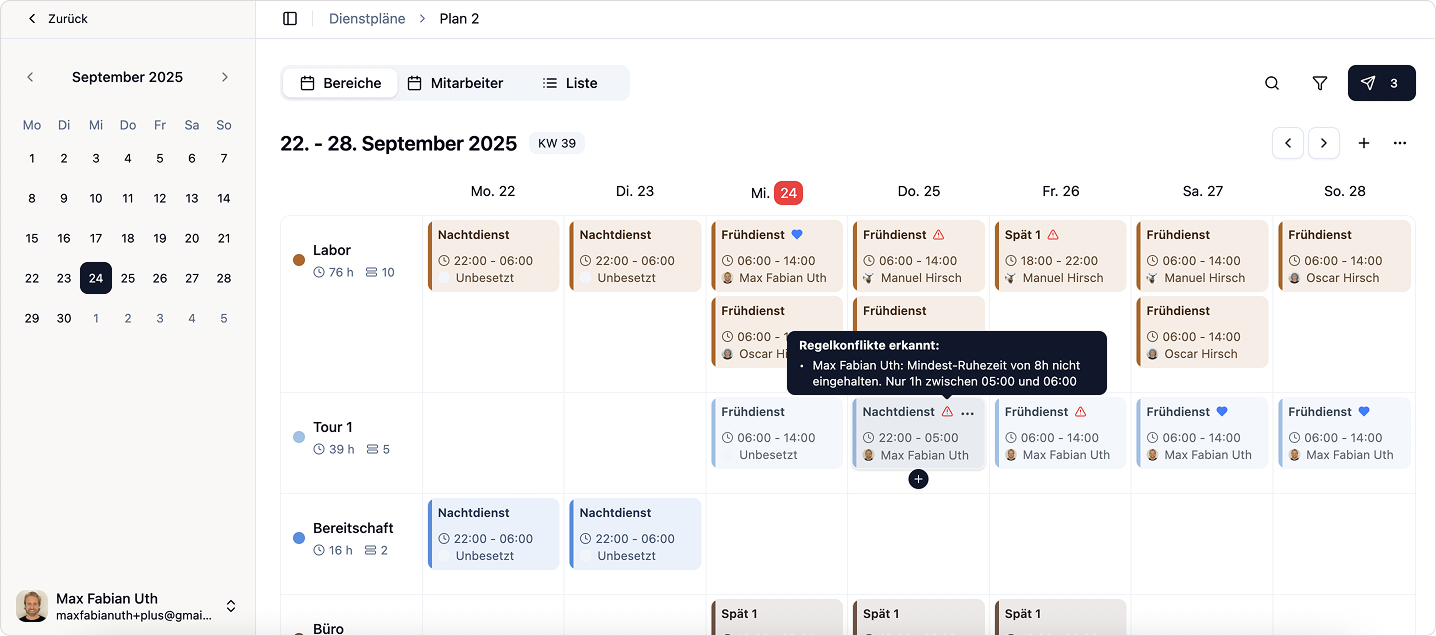 With medishift, you get modern and simple scheduling software for your medical practice. And the best part: You can use it for free!
Benefits of Digital Scheduling
Professional scheduling software for practices saves you lots of time and stress. You can create shift planning with just a few clicks, automatically check for conflicts, and inform your team about changes. The software handles compliance with labor laws and warns you of potential problems.
Features Good Software Should Offer
Good scheduling software for practices should offer at least these features: Automatic conflict checking, mobile app for your team, vacation management, shift swap functions, and integration with your existing practice systems. It's also handy to assign practitioners: for each shift you define which doctor is in and which assistant works with them – and set a release list per practitioner of who may be scheduled for them. A user-friendly interface that even your less tech-savvy employees can easily operate is particularly important.
Integration with Existing Practice Systems
The best scheduling software for practices is one that seamlessly integrates with your existing systems. Whether practice management system, time tracking, or communication tools - good software should connect easily, so you don't have to switch between different programs.

High quality starts with your organization
Free yourselves from old tables and manual processes.

Schedule Creation Tips for Daily Practice Life
As an experienced practice manager, I've collected many schedule creation tips over the years that will make workforce planning much easier for you. These practical recommendations help you establish efficient practice scheduling.
Best Practices for Planning
The most important schedule creation tips begin with proper preparation. Always plan your practice scheduling at least four weeks in advance, so your team has enough time to adjust to shifts. Use experience from past months to account for particularly busy times.
Considering Qualifications and Preferences
When planning practice schedules, you should always consider your team's individual qualifications and preferences. Not every employee can take on every task, and some have special wishes regarding their working hours. Good workforce planning finds the optimal compromise between team needs and practice requirements.
Buffer Times and Emergency Plans
One of the most important schedule creation tips is planning buffer times. Short-notice sick calls or emergencies can throw off your entire shift planning. Therefore, always plan a certain buffer and keep emergency plans ready so you can react quickly when something unexpected happens.
Scheduling & Employee Satisfaction: How to Succeed
Scheduling & employee satisfaction are directly connected. Satisfied employees are more productive, stay longer with the company, and create a positive atmosphere in the practice. Thoughtful practice scheduling is therefore not only organizationally important but also a crucial factor for your team's success.
Transparent Communication
One of the most important foundations for scheduling & employee satisfaction is transparent communication. Your team should always know why certain decisions were made and how practice scheduling works. Regular team meetings and open conversations help avoid misunderstandings and build trust.
Flexible Working Hours
Modern scheduling & employee satisfaction also means being flexible to your team's needs. Where possible, you should consider wishes regarding working hours and offer alternative work models. Good workforce planning finds ways to fulfill both practice requirements and individual employee needs.
Work-Life Balance in Daily Practice
Practice scheduling should promote your team's work-life balance, not hinder it. Plan sufficient rest periods, avoid too many consecutive shifts, and consider your employees' private commitments. Balanced scheduling & employee satisfaction ensures your team stays motivated and productive.
Frequently Asked Questions About Practice Scheduling
Further Resources
Deepen your knowledge of scheduling and practice organization:
- Workforce Capacity Planning – How to calculate optimal staffing needs
- Vacation Planning for Medical Practices – Vacation requests, absence management, and employee calendars
- MFA Collective Agreement 2025/2026 – Working hours, salary, and rights for medical assistants
- Optimize Practice Organization – Improve structures and workflows
- Workplace Safety in Medical Practices – Obligations and checklists for your practice