Hospital Scheduling Software: Selection & Costs
Hospital scheduling software compared: staffing ratios, HIS integration and working-time law, plus what it costs and how long implementation takes.
Table of Contents
Scheduling in a hospital is one of the most complex planning tasks there is. Hundreds of employees, different professional groups, fluctuating patient numbers, and strict regulatory requirements - all of this requires powerful hospital scheduling software. In this article, we show you what to look for when choosing and which solutions are suitable for clinics.
Key Takeaways
- Hospital scheduling software must be able to map complex shift models
- 24/7 operations require seamless shift coverage on all units
- Integration with existing clinic IT systems is crucial
- Different professional groups require different planning logic
- Automation significantly reduces administrative burden
Special Requirements in Hospitals
Hospitals have very different scheduling requirements than smaller medical facilities. Hospital scheduling software must understand and map these special features.
Complexity Through Many Professional Groups
Doctors, nurses, medical-technical assistants, administrative staff, and many other professional groups work together in a hospital. Each group has its own working time models, collective agreements, and qualification requirements. Good hospital scheduling software must be able to map all these different requirements in one system.
Dynamic Patient Numbers
Unlike a medical practice with scheduled appointments, patient numbers in hospitals fluctuate constantly. Emergency rooms must be staffed at all times, while elective units can be planned more flexibly. Your hospital scheduling software should consider this dynamic and enable quick adjustments.
Regulatory Requirements
Hospitals are subject to strict staffing ratios and qualification requirements. Minimum nursing staff regulations, for example, specify exactly how many nurses per patient must be present on certain units. Hospital scheduling software must automatically monitor these requirements.
24/7 Operations and Shift Models
Round-the-clock operations are the central feature of every clinic. Your hospital scheduling software must be able to map this complex operation.
Typical Shift Models in Hospitals
Hospitals usually work with 3-shift or 4-shift models. In addition, there are on-call services, standby duties, and handover times. The clinic scheduling software must know all these shift types and manage them correctly. You can find a detailed overview of different shift models in our article Shift Models Overview.
Staffing Levels on Units
Each unit has its own staffing requirements. The intensive care unit needs more staff per patient than a regular unit, and the emergency room must be staffed even with low patient volumes. Good hospital scheduling software enables unit-specific planning rules.
Weekend and Holiday Shifts
Planning weekend and holiday shifts is often particularly challenging. Employees understandably have wishes regarding days off, but at the same time operations must be guaranteed. The hospital scheduling software should support fair distribution of these unpopular shifts.
The Best Hospital Scheduling Solutions
There are various software solutions for hospitals with different focuses. Here's an overview of the main options.
Enterprise Solutions for Large Clinics
Large hospitals and clinic networks often use comprehensive enterprise solutions like SAP or specialized hospital information systems (HIS). These offer deep integration into all clinic processes but are correspondingly complex and expensive.
Specialized Hospital Software
In addition, there are providers that specialize in hospital scheduling. These solutions often offer better usability than ERP systems and can still be connected to existing clinic IT.
Modern Cloud Solutions
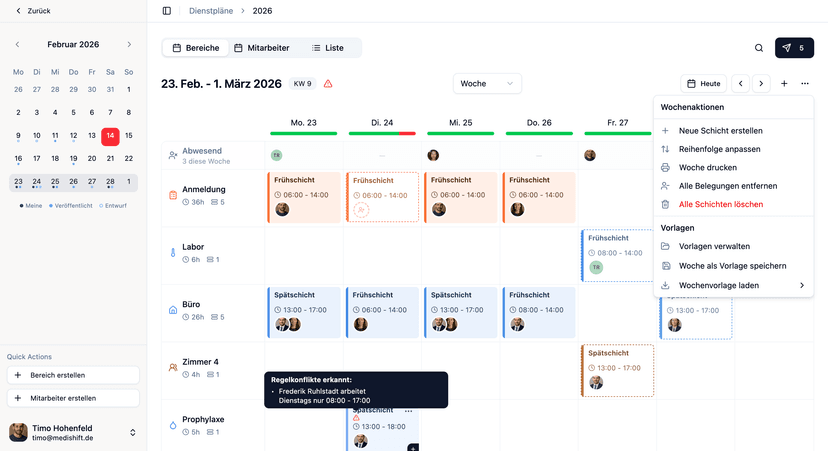
Cloud-based solutions are also increasingly gaining ground in hospitals. medishift, for example, offers a modern, user-friendly alternative that is particularly suitable for smaller clinics and specialty hospitals. The intuitive operation enables a quick start without weeks of implementation projects.

High quality starts with your organization
Free yourselves from old tables and manual processes.

Integration with Clinic Systems
Hospital scheduling software doesn't exist in a vacuum - it must fit into the existing IT landscape.
Connection to Hospital Information Systems
Most clinics use hospital information systems (HIS) as their central data hub. The clinic scheduling software should be able to import employee data and ideally also occupancy information from the HIS to avoid double entries.
Interfaces to Time Tracking
For clean payroll accounting, target and actual times must be reconciled. The hospital scheduling software should therefore offer an interface to time tracking or cover this function itself.
Integration with HR Systems
Employee master data, qualifications, and working time accounts are often maintained in separate HR systems. Good hospital scheduling software can import this data and keep it synchronized.
Compliance and Working Time Law
Special working time regulations apply in hospitals. Your software must know these and monitor them automatically.
Working Time Law and Exceptions
Working time law permits longer working hours in hospitals than in other industries but ties this to conditions such as compensation time. Your hospital scheduling software must know these special regulations and apply them correctly. You can find basic information about labor law in our article Employee Rights in Scheduling.
Minimum Nursing Staff Levels
Minimum nursing staff regulations prescribe minimum staffing for certain units. Clinic scheduling software should automatically monitor these minimum levels and warn if a shift would fall below the required staffing.
Documentation for Audits
Hospitals are regularly audited - whether by medical review boards, professional associations, or authorities. The hospital scheduling software must document all schedules and changes completely and be able to generate appropriate evidence when needed.
Implementation in Clinics
Introducing new hospital scheduling software is a significant project. With the right preparation, the transition goes smoothly.
Change Management in Hospitals
Hospitals are complex organizations with established structures. Introducing new software means change - and change needs management. Involve unit managers, nursing management, and employee representatives early to create acceptance.
Piloting on Selected Units
Rather than converting the entire hospital at once, a gradual introduction is recommended. Start with one or two pilot units, gather experience, and then roll out the clinic scheduling software to other areas.
Training Users
The best software is useless if users can't operate it. Plan sufficient time for training - both for those responsible for planning and for employees who view their shifts via the app.
Try Medishift for free now!
- Modern duty planning in just minutes
- Automated workflows for your practice
- Forever free for up to 10 employees
Frequently Asked Questions About Hospital Scheduling Software
Conclusion: The Right Software for Your Clinic
Choosing the right hospital scheduling software is a strategic decision with long-term implications. The software must be able to map the complexity of clinic operations while remaining usable.
For smaller clinics and specialty hospitals, we recommend evaluating modern cloud solutions like medishift. They often offer the best ratio of functionality, usability, and cost. Larger facilities should evaluate specialized hospital solutions and pay attention to integration with existing systems.
Regardless of size, the following applies: good hospital scheduling software relieves planning managers, increases planning quality, and contributes to employee satisfaction. The investment is worth it!