Practice Management: Leadership Guide 2026
Discover effective practice management for dental practices and physiotherapy. Optimize your administration with the right software and proven strategies in 2026.

Table of Contents
As a practice owner, you know the feeling: The day has too few hours, appointments pile up, and administration takes more and more time. Effective practice management is no longer just a nice-to-have today - it's the decisive factor for your practice's success. In this comprehensive guide, I'll show you how to optimally organize your practice while saving time and costs.
What is Practice Management? Definition and Basics
The Importance of Modern Practice Management
Practice management encompasses all organizational, administrative, and business activities for smooth practice operations. In Germany, 90% of practice owners still run their practices analogously - yet thoughtful practice organization can increase revenue by up to 30%.
Professional practice management brings measurable benefits: reduced waiting times for patients, optimized resource utilization, improved employee satisfaction, higher patient retention, and increased profitability.
Core Areas of Practice Management
Effective practice management is divided into various core areas that are all closely interconnected:
1. Appointment Management and Patient Care The foundation of every successful practice is thoughtful appointment management. This involves not just appointment scheduling but optimal utilization of available times with simultaneously minimal waiting times.
2. Personnel Management and Team Leadership Your team is the heart of your practice. Efficient personnel planning, clear responsibilities, and regular training are essential for success.
3. Business Management From cost planning through liquidity management to investment planning - without business know-how, no practice runs successfully long-term.
4. Quality Management Continuous improvement of treatment quality and patient safety are not only legally required but also crucial for practice success.
Differences Between Various Practice Types
The requirements for practice management vary considerably depending on specialty. Dental practices and physiotherapy practices require completely different management approaches.
Dental Practice Management: Special Challenges
Specific Requirements in Dentistry
Dental practice management requires flexible practice organization: prophylaxis appointments (30 min), fillings (45-60 min), prosthetic work (2-3 hrs), and emergencies must be optimally coordinated.
Appointment Planning and Patient Management
Appointment planning is the heart of dental practice management. This is where it's decided whether your practice runs economically successfully or not. Idle time costs money, overbooking leads to stressed patients and dissatisfied staff.
Successful dental appointment planning requires buffer times of 10-15 minutes between more complex treatments. Clustering similar procedures optimizes workflow, while an established recall system with automatic reminders ensures follow-up appointments. Additionally, clear rules for missed appointments should be defined.
A well-thought-out recall system can increase a dental practice's revenue by up to 25%. Patients who regularly come for prophylaxis rarely need extensive treatments and remain loyal to the practice long-term.
Materials Management and Equipment Management
In dentistry, efficient materials management is particularly important. Dental materials are often expensive, have limited shelf life, and sometimes must be stored under special conditions. Poor practice administration can quickly lead to high losses here.
Efficient materials management is based on automated inventory monitoring with minimum quantity alerts, professional supplier management with price comparisons, and storage optimization according to ABC analysis. Integration into the practice management software creates a seamless workflow.
Physiotherapy Practice Management: Efficient Therapy Planning
Special Features in Physiotherapy Practices
Physiotherapy practice management focuses on treatment series rather than individual appointments. The practice organization must optimally plan treatment cycles of 6-12 appointments over 3-6 weeks.
Therapy Planning and Treatment Cycles
For physiotherapy practice management, planning treatment series is essential. You need to organize not just the first appointment but coordinate an entire series of follow-up appointments. This places high demands on your appointment management system.
Successful therapy planning requires automatic series planning for follow-up appointments and fixed assignment of patients to therapists. At the same time, the system must be flexible enough to allow appointment rescheduling without series interruption while ensuring optimal utilization of all therapists.
A well-functioning system for series planning can increase a physiotherapy practice's efficiency by up to 40%. Patients receive their desired appointments, therapists have predictable working hours, and the practice achieves optimal utilization.
Compliance and Follow-up
A critical success factor in physiotherapy practice management is patient therapy compliance. Many patients discontinue their treatment series prematurely or attend appointments irregularly. This leads not only to poorer treatment outcomes but also economic losses.
Therapy compliance can be improved through various strategies: automatic appointment reminders via SMS or email, comprehensive education about the importance of completing the treatment series, flexible appointment scheduling for working people, and reward systems for regular attendance.
Practice Management Software: The Digital Revolution
Advantages of Digital Practice Administration
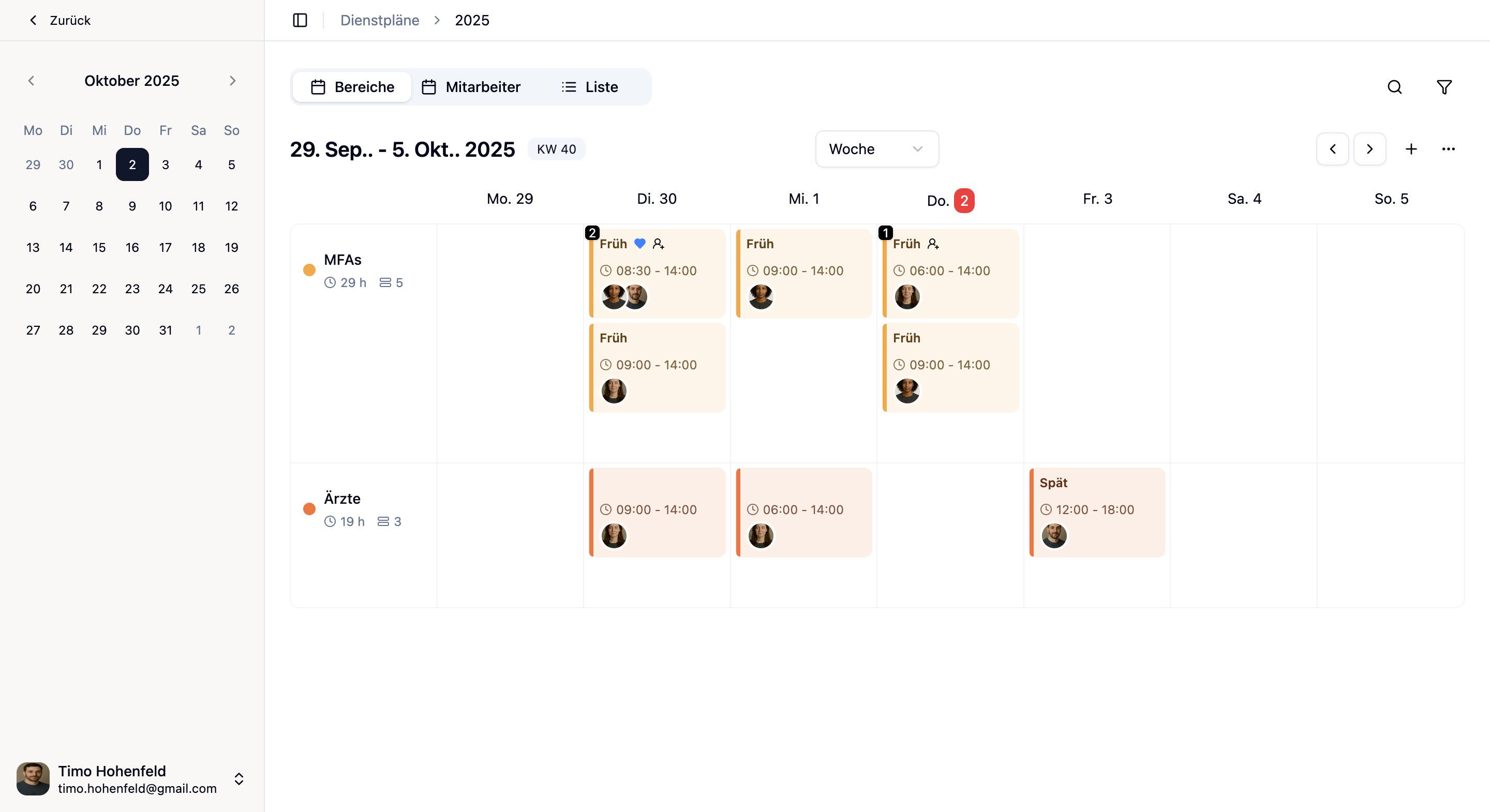
Modern practice management software saves up to 3 hours daily, reduces errors, and improves oversight. Practices have 35% fewer administrative tasks and can focus more on patients.
Important Features of Practice Management Software
When selecting practice management software, you should look for certain core features. Not every software is suitable for every practice - requirements vary depending on specialty and practice size.
Professional practice management software needs intelligent appointment management with automatic suggestions, conflict management, and mobile booking capability. Comprehensive patient management includes digital records, automatic backups, and GDPR-compliant storage. Business analytics provide real-time revenue statistics, cost analyses, and profitability calculations. Seamless integration occurs through interfaces to billing systems, import/export functions, and cloud synchronization.
ROI and Cost Savings Through Digitalization
The investment in practice management software usually pays off in the first year. Medium-sized practices save 15,000-25,000 euros annually through less paperwork, automation, and optimized appointment utilization.
Optimizing Practice Administration: Proven Strategies
Workflow Optimization in Daily Practice
Optimized practice administration begins with systematic analysis: 1) As-is analysis of all processes, 2) Identify weaknesses, 3) Develop solutions. Standardized checklists, clear responsibilities, and regular KPI measurement improve efficiency.
Employee Leadership and Team Management
Effective employee leadership is central to optimized practice administration. Clear communication, continuous training, and delegation create the foundation for successful practice management.
Quality Management and Control
Systematic QM standardizes processes and continuously improves practice administration through patient surveys, internal audits, and error reporting systems.
Practice Organization: Creating Structure and Efficiency
Organizational Structures in Medical Practices
Thoughtful practice organization is the foundation for efficient practice management. Small practices use flat hierarchies; larger ones need clear management levels and specialized departments.
Process Optimization and Standardization
Standardized processes are key to efficient practice organization. Important areas: patient intake, treatment procedures, and administrative processes with uniform checklists and documentation.
Change Management for Organizational Changes
Changes in practice organization require professional change management: clear communication, gradual introduction, training, and feedback integration.

Try Medishift for free now!
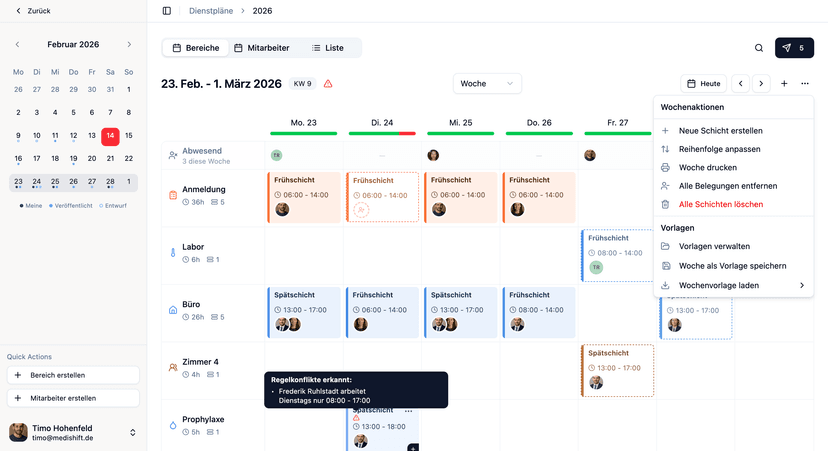
- Modern duty planning in just minutes
- Automated workflows for your practice
- Forever free for up to 10 employees
The Future of Practice Management
Digital Trends and Innovations
Future practice management will be characterized by telemedicine, online appointment booking, and automated communication. These technologies expand capacities and improve patient satisfaction.
Artificial Intelligence in Daily Practice
AI is revolutionizing practice management through automation of planning processes, intelligent conflict resolution, and natural language interfaces for easier operation.
Sustainability and Modern Practice Leadership
Modern practice administration considers ecological aspects: digital patient records, energy-efficient equipment, and environmentally friendly material choices.
Practice Management Software Comparison 2026
Choosing the right practice management software is crucial for your practice's success. While traditional PMS (practice management systems) primarily cover billing and patient management, modern solutions like medishift offer holistic practice management with scheduling, vacation management, and staff coordination.
The 5 Most Important Features of Modern Practice Management Software
- Intelligent Scheduling: Automatic creation of shift plans considering availability, preferences, and legal requirements
- Vacation Management: Digital workflow for vacation requests with automatic conflict checking
- Mobile Availability: Apps for iOS and Android enable access from anywhere
- Shift Swap via App: Employees can swap shifts among themselves – simple and transparent
Learn more about medishift's prices and features on our pricing page.
Frequently Asked Questions About Practice Management
Conclusion: Successful Practice Management as Competitive Advantage
Summary of Key Points
Effective practice management is crucial today for the success of every medical practice. The key insights from this guide:
A holistic approach is essential for successful practice management, which encompasses far more than just appointment planning. From practice organization through employee leadership to business management, all areas must be optimally coordinated. Digitalization is the key to success - modern practice management software is no longer an option but a necessity. It's also important to recognize that dental practice management fundamentally differs from physiotherapy practice management. Each specialty needs individual approaches and solutions. Finally, practice administration is not a one-time project but a continuous optimization process.
Action Recommendations for Practice Owners
As a practice owner, you should now take concrete steps to optimize your practice management:
Start immediately with an honest as-is analysis of your processes and identify the three biggest weaknesses in your practice administration. A team meeting to discuss improvement suggestions creates the foundation for further steps. In the medium term, evaluate various practice management software solutions, develop standardized processes, and implement a system for continuous feedback. Long-term investment in professional software, a comprehensive quality management system, and complete digitalization of all practice processes leads to success.
Next Steps for Optimization
The first step toward optimized practice management is often the hardest. But with the right approach and suitable tools, you can sustainably improve your practice. Modern solutions like medishift help optimize key areas of practice administration - from intelligent shift scheduling to digital vacation management.
Remember: Every hour you invest today in optimizing your practice management saves you dozens of hours in the future. Your patients will thank you with higher satisfaction, your team can work more relaxed, and you regain time for what really matters: treating your patients.
The future belongs to practices that rely on modern practice management today. Be one of them and secure the competitive advantage you need for a successful practice.