Practice Management Training: Cost & Salary
Practice management training: $1,500-$8,000 in costs, 6 to 18 months part-time, salary gains of $5,000-$10,000 a year. Compare providers before you enroll.
Table of Contents
You work in a medical practice and want to develop your career? Practice management training could be exactly the right step for you. In this guide, you'll learn everything about training opportunities, providers, costs, and career prospects in practice management.
Key Takeaways
- Practice management training qualifies you for leadership roles in healthcare practices
- Costs typically range from $2,000 to $6,000 depending on the provider
- Typical duration: 6 to 18 months part-time
- Professional certifications and chamber of commerce credentials are particularly recognized
- After training, salary increases of $5,000-$10,000 annually are realistic
- The profession offers diverse opportunities across medical, dental, veterinary, and care practices
What is Practice Management?
Before we dive into training options, let's clarify: What does practice management actually mean?
Practice management encompasses all organizational, business, and personnel tasks necessary for the smooth operation of a medical practice. This goes far beyond traditional medical assistant duties.
A practice manager handles:
- Staff scheduling and shift planning
- Quality management and process optimization
- Billing and financial controlling
- Patient communication and complaint management
- Materials management and procurement
- Digitalization and IT coordination
If you want to learn more about the profession, read our detailed article about Practice Manager: Career Profile, Training & Salary.
Why Practice Management Training?
The question is legitimate: Is the effort worth it? Here are the most important reasons for practice management training:
Career Advancement
With professional training, you qualify for positions that would otherwise be closed to you. Instead of "just" being a medical assistant, you become a leader.
Higher Salary
Practice managers earn on average $5,000-$10,000 more annually than traditional medical assistants. In large practices or medical centers, the difference can be even greater.
More Responsibility
If you enjoy shaping things rather than just executing them, practice management is exactly your thing. You actively influence practice development.
Job Security
Well-trained practice managers are in demand. Demand exceeds supply – that gives you negotiating power and security.
Variety
Tasks in practice management are diverse. No two days are alike. If routine bores you, you'll find new challenges here.
Types of Practice Management Training
There are various paths to further education in practice management. Here's an overview of the most common options:
Professional Certification Programs
Practice management certification programs are offered by professional associations, healthcare organizations, and educational institutions. These certifications are highly recognized and provide structured learning.
Advantages:
- High recognition among employers
- Standardized, quality-assured content
- Practical, applicable knowledge
- Networking opportunities with other participants
Disadvantages:
- Often more expensive than other options
- Fixed schedules and locations
- Examination requirements
University-Based Programs
Many universities and colleges offer healthcare practice management courses as part of healthcare administration or healthcare management programs.
Advantages:
- Academic credentials
- Comprehensive business knowledge
- Strong theoretical foundation
- Career advancement opportunities
Disadvantages:
- More expensive and time-intensive
- Sometimes less practice-focused
- May require prior academic qualifications
Private Training Providers
Numerous private academies offer practice management training. Quality varies significantly here.
Advantages:
- Flexible schedules
- Often available online
- Individual support
- Customizable programs
Disadvantages:
- Varying quality levels
- Not always recognized credentials
- Research the provider carefully
Online Courses and Distance Learning
For those who need maximum flexibility, online medical practice management training options are available.
Advantages:
- Maximum time flexibility
- Learn from home
- Often more affordable
- Self-paced learning
Disadvantages:
- Less personal interaction
- Self-discipline required
- Limited hands-on practice
- May lack networking opportunities

High quality starts with your organization
Free yourselves from old tables and manual processes.

Content of Practice Management Training
What do you actually learn in a healthcare practice management course? Content varies by provider, but these core topics are almost always included:
Business Fundamentals
- Practice economics and controlling
- Budget planning and cost accounting
- Key performance indicators and practice analysis
- Investment planning
You don't need a business degree, but you should understand the basics. How much does a patient contact cost? Which treatments are profitable? Where are potential savings?
Personnel Management
- Staff planning and scheduling
- Employment law for practices
- Employee leadership and motivation
- Conflict management
- Recruitment processes
Especially practice scheduling is a central topic. With modern tools like medishift, this area can be efficiently managed today.
Quality Management
- Implementing QM systems
- Documenting processes
- Preparing for audits
- Continuous improvement
Quality management is essential in healthcare practices. As a practice manager, you're often the QM officer.
Billing and Revenue Cycle Management
- Insurance billing procedures
- Private pay billing
- Revenue optimization
- Claims processing and collections
Billing knowledge is invaluable. There's often untapped potential here for practices.
Communication and Marketing
- Patient communication
- Complaint management
- Practice marketing
- Online presence and reputation management
Attracting and retaining patients – that's also part of modern practice management.
Healthcare Technology and Digitalization
- Practice management software
- Electronic health records
- Online appointment scheduling
- Data privacy and security (HIPAA, GDPR)
Digitalization in healthcare is advancing. As a practice manager, you're often the driver of this development.
Prerequisites for Training
What do you need to start practice management training?
Formal Prerequisites
Most providers require:
- Completed professional training (ideally medical assistant, nursing, or business administration)
- Work experience in healthcare (usually 2-3 years)
- Sometimes: Minimum age 21 years
- Some programs: High school diploma or equivalent
Personal Prerequisites
At least as important are your soft skills:
- Organizational talent: You keep track of multiple parallel tasks
- Communication skills: You can handle doctors, staff, and patients
- Numerical aptitude: Budgets and statistics don't scare you
- Assertiveness: You make decisions and stand by them
- Willingness to learn: You're open to new things and continuously develop
Time Prerequisites
Practice management training usually takes place part-time. Expect:
- 6-18 months total duration
- 10-20 hours per week study time
- In-person sessions (varies by provider)
- Exam preparation at the end
Clarify in advance with your employer whether you'll be released for in-person sessions.
Costs and Financing
An important question: What does practice management certification cost and how do you finance it?
Cost Overview
| Provider Type | Typical Costs | | ------------------------- | --------------- | | Professional Associations | $2,500 - $4,500 | | Universities/Colleges | $4,000 - $8,000 | | Private Academies | $2,000 - $5,000 | | Online/Distance Learning | $1,500 - $3,500 |
Additional costs may include:
- Examination fees ($100-400)
- Course materials ($200-500)
- Travel costs for in-person sessions
Financing Options
Employer: Many practices cover costs partially or fully. In return, you often commit to staying with the practice for a certain period. Ask – you'd be surprised how many employers support this.
Government Programs: Depending on your location, there may be workforce development grants or continuing education subsidies available.
Student Loans: For university-based programs, traditional student loans may be available.
Payment Plans: Many private providers offer monthly payment options to spread costs over the training period.
Tax Deductibility: Professional development costs are often tax-deductible as professional expenses. This reduces the actual burden.
What to Look for in a Training Provider
When choosing a practice management training program, consider these factors:
Accreditation and Recognition
- Is the program accredited by recognized bodies?
- Are credentials accepted by employers in your target market?
- What do alumni say about the program's value?
Curriculum Quality
- Does the curriculum cover all essential practice management areas?
- Is content current and relevant to modern healthcare practices?
- Are instructors experienced practice managers or healthcare professionals?
Flexibility and Format
- Does the schedule fit your work and personal commitments?
- Is the learning format suitable for your learning style?
- Are there options for accelerated or extended completion?
Support and Resources
- What kind of student support is available?
- Are there networking opportunities with peers and professionals?
- Does the program offer job placement assistance?
Return on Investment
- Will the certification lead to tangible career advancement?
- What's the typical salary increase for graduates?
- How long will it take to recoup your investment?
Practice Management Training for Different Professional Backgrounds
Depending on your background, there are specialized offerings:
For Medical Assistants
The classic target group. Many training programs build directly on medical assistant training. You already bring medical knowledge and add business competencies.
For Nurses
Coming from nursing, you can also transition into practice management. Training then emphasizes practice-specific content and business skills.
For Dental Assistants
For the dental sector, there are specialized offerings that address the specifics of dental practices – from specialized equipment to dental-specific billing.
For Veterinary Technicians
Veterinary practice management has unique considerations around inventory management, species-specific protocols, and specialized client communication.
For Career Changers
With a business background, entry is also possible. Training then focuses more on healthcare-specific knowledge and regulations.
After Training: Career Opportunities
What can you expect after successfully completing practice management training?
Typical Positions
- Practice Manager: The classic role with overall responsibility for practice organization
- Team Lead: Leading a sub-team (e.g., front desk, clinical staff)
- QM Officer: Responsibility for quality management
- Billing Manager: Specialization in billing and revenue cycle
- Office Manager: In larger practices or medical centers
Salary Expectations
After completing medical practice management training, these salaries are realistic:
| Position | Salary Range (annual, gross) | | ---------------------------------- | ---------------------------- | | Practice Manager Small Practice | $35,000 - $45,000 | | Practice Manager Group Practice | $45,000 - $55,000 | | Practice Manager Medical Center | $50,000 - $65,000 | | Senior Manager Large Organizations | $60,000 - $80,000 |
Salaries vary by region, practice size, and negotiation skills.
Career Development
Medical practice management training doesn't have to be the end. Possible next steps:
- Healthcare Administration Degree: Bachelor's or Master's for advanced positions
- Specialized Certifications: Focus on areas like compliance, billing, or HR
- Consulting: Helping other practices optimize their operations
- Multi-Site Management: Overseeing multiple practice locations
- Practice Ownership: Some practice managers eventually become practice owners or partners
Frequently Asked Questions About Practice Management Training
Conclusion: Is Practice Management Training Worth It?
Short answer: Yes, in most cases.
Practice management training is an investment in your professional future. You qualify for responsible positions, can expect higher salaries, and get a varied work day.
The most important points summarized:
- Choose a recognized provider (professional associations, universities)
- Clarify financing upfront (ask your employer!)
- Plan sufficient time for part-time training
- Actively use new competencies in your job
- Network with fellow students and industry professionals
The healthcare work environment is changing. Digitalization, new requirements, growing practice structures – all this requires well-trained practice managers. With the right healthcare practice management course, you position yourself optimally for this development.
And when you later take over practice scheduling as a practice manager: Tools like medishift make this task a breeze. Modern practice organization means leveraging technology to focus on what matters – excellent patient care and a well-functioning team.
Practice management training opens doors. It gives you the skills to not just work in healthcare, but to actively shape how healthcare practices operate. If that excites you – and you have the organizational mindset and people skills – this could be your next career move.
The demand for skilled practice managers continues to grow as healthcare becomes more complex and practices face increasing operational challenges. Whether you're looking to advance within your current practice or open up new career opportunities, professional training in practice management provides the credentials and knowledge you need.
Start researching programs today, talk to your employer about support options, and take the next step in your healthcare career.
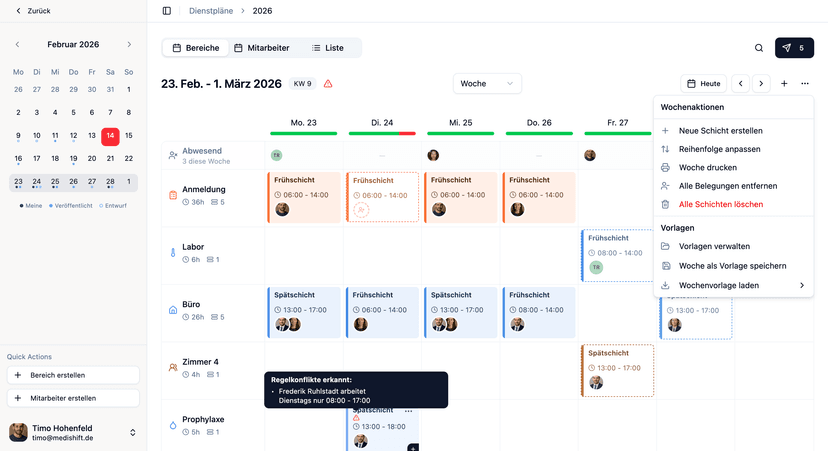
Try Medishift for free now!
- Modern duty planning in just minutes
- Automated workflows for your practice
- Forever free for up to 10 employees