Practice Manager: Salary, Duties & Training
What does a practice manager earn and what does the job involve? €2,500 to €4,500 gross per month, plus IHK (Chamber of Commerce) training in 6-12 months.

Table of Contents
Key Takeaways
- Practice managers are the organizational hub of a medical practice
- Training is completed through continuing education and chamber of commerce certificates
- Average salary ranges between €2,500 and €4,500 gross
- Prerequisites typically include completed medical or commercial training
- The profession offers diverse career opportunities across different practice types
What is a Practice Manager?
A practice manager is essentially the linchpin of a well-functioning medical practice. While doctors focus on patients, the practice manager ensures everything runs smoothly.
Think of it this way: A practice is like a small business. Staff need to be organized, appointments coordinated, billing completed, and supplies ordered. That's exactly where the practice manager comes in. They're the interface between medical staff, administration, and sometimes patients too.
So what does a practice manager actually do? In short: They keep the practice running and ensure everything goes according to plan. From staff scheduling to quality management to health insurance billing – the range of tasks is broad.
Practice Manager Responsibilities
The responsibilities of a practice manager are extremely diverse. That's what makes the job so exciting. Here are the key areas:
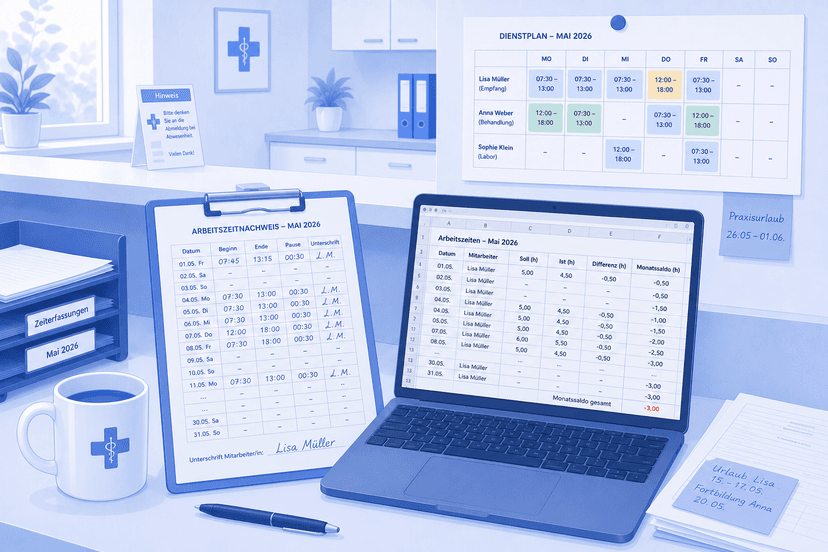
Personnel Management: Creating shift schedules, coordinating vacation planning, onboarding new employees. Practice scheduling can quickly become complex when multiple doctors and medical assistants need to be coordinated.
Quality Management: Documenting processes, ensuring hygiene standards, optimizing workflows. A good practice manager knows QM guidelines inside and out.
Billing & Finance: Preparing quarterly billing, tracking outstanding invoices, keeping an eye on budgets. Accuracy is essential here.
Patient Communication: Complaint management, appointment coordination during bottlenecks, sometimes direct patient care.
Materials Management: Placing orders, monitoring inventory levels, comparing suppliers.
Practice Organization: Preparing meetings, structuring internal processes, implementing digital tools. Those interested in efficient processes can find more tips in our article on optimizing practice organization.
In practical terms, as a practice manager you're the person who knows where everything is, who can do what, and how to do it best.
Practice Managers in Different Practice Types
The tasks differ significantly depending on the practice type. A practice manager in a dental practice has different priorities than someone in a large general practice or medical care center (MVZ).
In dental practices: The focus is often on materials management (dental products, instruments) and appointment optimization. Prophylaxis appointments, treatment series, and recall systems must be perfectly organized.
In general practices: Chronic care programs, preventive examinations, vaccination management – versatility is required here. You often work closely with nursing services and other providers.
In medical care centers (MVZ): Larger structures mean more coordination. Multiple specialties, cross-functional processes, larger teams – this requires real organizational talent.
In specialist practices: Depending on the specialty (orthopedics, cardiology, gynecology), specific requirements apply – from equipment management to specialized billing knowledge.

Training to Become a Practice Manager
Training to become a practice manager isn't a traditional apprenticeship like medical assistant or office clerk. Instead, it's continuing education that builds on existing qualifications.
Typical prerequisites:
- Completed medical training (medical assistant, nurse, medical receptionist) OR
- Commercial training (office clerk, healthcare management) OR
- Relevant work experience in a practice setting
Most people pursuing practice manager certification have already worked several years in a practice and want to take the next career step. This makes sense – practice experience is invaluable when you're later taking on organizational responsibility.
Where can you complete the training?
The most well-known providers are:
- Chamber of Commerce (IHK): The IHK practice manager certification is particularly recognized and typically takes 6-12 months part-time
- Private training providers and academies
- Medical associations (in some German states)
- Online courses and distance learning
Costs range between €1,500 and €4,500, depending on provider and scope. Some practices cover the costs if you commit to staying for a certain period afterward.
Practice Manager Continuing Education
Practice manager continuing education is modular and covers various topic areas:
Business Fundamentals: Budget planning, cost accounting, controlling. Even if you don't need a business degree – you should have the basics down.
Personnel Management: Labor law, employee leadership, communication. How do I handle conflicts? How do I motivate my team?
Quality Management: Implementing QM systems, documenting processes, preparing for certifications.
Billing Systems: GOÄ, EBM, private and statutory billing. This can get quite complex.
Marketing & Patient Retention: How do I position the practice? How do I retain patients long-term?
Digitalization: Practice software, online appointment booking, digital patient records. Practice management is becoming increasingly efficient through digital tools like medishift.
Practice manager certification usually ends with an examination. At the IHK, this consists of a written portion and often a presentation or oral exam. With the certificate in hand, you have a real qualification that really makes an impression in job applications.
Practice Manager Salary
Let's get to the key question: What does a practice manager actually earn? The practice manager salary in Germany averages between €2,500 and €4,500 gross per month. But – and this is important – the range is wide.
Entry-level positions with fresh certification often start at €2,500-3,000. With several years of experience and expanded responsibility, €3,500-4,000 is realistic. In large medical care centers or practice chains with leadership responsibility, it can be €4,500 and more.
The salary depends on several factors – let's look at the most important ones.
Factors Affecting Salary Differences
1. Practice Size and Type
A solo practice typically pays less than an MVZ with multiple locations. In a large healthcare center with 20+ employees, the responsibility is simply greater – and that's reflected in the salary.
2. Region
As everywhere in healthcare, there's an urban-rural divide here too. Salaries are higher in major cities like Munich, Hamburg, or Frankfurt than in rural areas – though living costs are also higher there.
3. Qualifications and Experience
An IHK-certified practice manager with 10 years of experience earns significantly more than someone who just completed their training. Additional qualifications (e.g., billing management, QM officer) can also increase salary.
4. Scope of Responsibility
Do you lead a team yourself? Are you responsible for multiple locations? Do you manage the entire budget? The more responsibility, the higher the salary typically.
5. Additional Benefits
Many practices offer benefits beyond base salary: company pension, training budget, company car (rare), capital-forming benefits, or flexible working hours.
Honestly: Salary alone shouldn't be the only reason for the continuing education. But it's definitely a career step up – both financially and in terms of responsibility.
Career as a Practice Manager
Career opportunities as a practice manager are quite good. Why? Because well-organized practices desperately need qualified people to keep things running. And those aren't found on every corner.
Classic career paths:
From Medical Assistant to Practice Manager: Many start as medical assistants, work several years in patient care, and then realize: I enjoy organization more than treatment. Then continuing education to become a practice manager is a logical consequence.
Advancement Within the Practice: You're already working in a practice and impressing with your organizational skills? Many doctors are glad when someone from their own team takes on responsibility. The advantage: You already know the processes.
Moving to Larger Structures: With experience as a practice manager, jobs in MVZs, practice chains, or healthcare centers are also open to you. The structures are more complex here – but so are the salary and development opportunities.
Specialization: Some practice managers become experts in specific areas: billing management, quality management, digitalization. This niche expertise is valuable and in demand.
Self-Employment: After years as a practice manager, some also offer consulting services – for practice founders, process optimization, or certifications.
What you should bring:
- Organizational talent (sounds basic, but it's THE core competency)
- Stress resilience (things don't always go according to plan)
- Strong communication skills (you're the interface between everyone)
- Number skills (budget, billing, statistics)
- Digital literacy (modern practices work digitally)
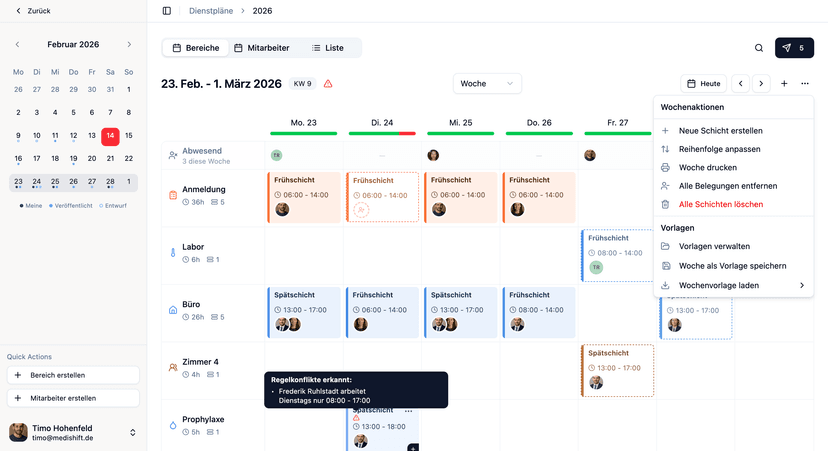
A tool like medishift can help you make daily practice operations more efficient – from shift scheduling to vacation management. Especially as a practice manager, you quickly notice: The better the digital processes run, the more time remains for the really important things.
Frequently Asked Questions About the Practice Manager Role
Conclusion: Is Practice Manager Training Worth It?
Short answer: Yes, definitely.
If you already work in a medical environment and notice that organization and coordination appeal to you more than direct patient work, training to become a practice manager is a great way to advance your career.
The benefits at a glance:
- More Responsibility: You actively shape how the practice runs
- Higher Salary: On average €500-1,000 more than without continuing education
- Variety: No two days are the same
- Future-Proof: Well-organized practices will always be needed
- Development Opportunities: You don't stand still but can specialize further
What you should consider:
- The training costs time and money (usually part-time over several months)
- You carry more responsibility – that can be stressful at times
- Without prior experience in a practice, it will be difficult
My tip: Talk to your employer about whether they'll support or even fund the training. Many practices are glad when someone from the team wants to develop – and that pays off for both sides.
At the end of the day, practice manager is a profession for people who like to keep an overview, bring structure to chaos, and keep the big picture in mind. If that applies to you: Go for it!

Try Medishift for free now!
- Modern duty planning in just minutes
- Automated workflows for your practice
- Forever free for up to 10 employees