Practice Organizational Chart: A Practical Guide
Build a practice organizational chart: example chart, clear responsibilities and communication paths — plus a 30-day plan for your practice organization.

Table of Contents
Optimizing practice organization is one of the most important tasks for every practice owner. As a doctor or practice manager, you face the daily challenge of running your practice efficiently, coordinating the team, and simultaneously ensuring optimal patient care. Thoughtful practice organization can make the difference between chaos and smooth operations.
Key Takeaways
- Optimizing practice organization is crucial for long-term practice success
- A thoughtful organizational chart creates clear structures and responsibilities
- Modern digital tools significantly facilitate practice organization
- Workflow optimization reduces wait times and increases patient satisfaction
- A well-organized practice leads to happier employees and higher productivity
What is Effective Practice Organization?
Effective practice organization means far more than just a functioning appointment calendar. If you want to optimize your practice organization, it's about systematically structuring all areas of your practice and coordinating them with each other.
The Pillars of Modern Practice Organization
Thoughtful practice organization rests on several pillars: clear personnel structures, efficient appointment scheduling, optimized workflows, and modern technology. These areas interlock and form the foundation for a successfully organized practice.
Why Structured Organization is So Important
Without structured practice organization, you quickly lose oversight. Patients wait too long, employees are overwhelmed, and important tasks are left undone. A well-organized practice, on the other hand, runs like clockwork: appointments are kept punctually, the team works hand in hand, and both patients and employees are satisfied.
Impact on Patient Satisfaction and Practice Success
When you've optimized your practice organization, you immediately notice increased patient satisfaction. Shorter wait times, structured processes, and a relaxed team directly affect the patient experience. Satisfied patients recommend your practice to others and thus contribute to economic success.
Creating the Perfect Organizational Chart
A thoughtful organizational chart is the heart of every well-organized practice. It defines not only hierarchies but also creates clarity about responsibilities and communication channels.
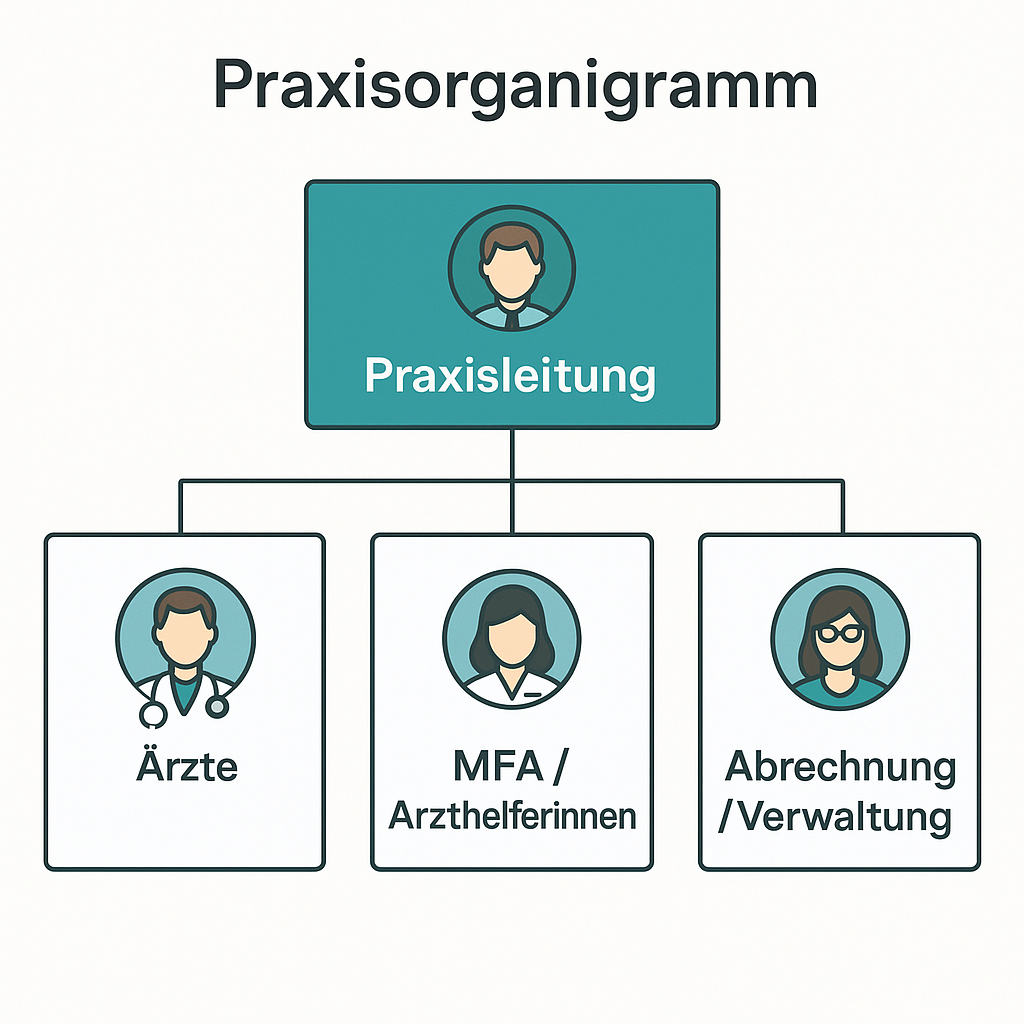
A thoughtful organizational chart creates clear structures and defines responsibilities in your practice.
Defining Hierarchies and Responsibilities
When creating your organizational chart, you should first identify the various positions in your practice. From practice management to medical assistants to cleaning staff - everyone has their place in the organizational chart. Clearly define who is responsible for which areas and what decision-making authority each position has.
Establishing Communication Channels in the Organizational Chart
A good organizational chart shows not only "who does what" but also "who communicates with whom." Establish clear communication channels for various situations: Who informs in emergencies? How does the handover between shifts work? Who is the contact person for which patient concerns? Anchoring these structures in the organizational chart saves time and confusion later.
Considering Flexibility in the Organizational Chart
Your organizational chart should create clear structures while also providing enough flexibility for daily practice life. Plan substitution arrangements and define how to proceed with staff absences. A rigid organizational chart can hinder more than help in critical situations.
Practice Organization in Different Practice Types
Each type of practice brings its own organizational challenges. What works in a general practice may not necessarily be optimal in a dental or specialist practice.
Special Challenges in Dental Practices
In dental practices, different aspects take center stage when optimizing practice organization. Longer treatment times, special equipment, and the need for sterilization require a different approach to appointment scheduling. Patient care also differs: many patients fear dental treatments and need special attention.
Optimizing Appointment Scheduling and Patient Care
For appointment scheduling in different practice types, you must consider the specifics of your specialty. While short, standardized appointments often dominate in general practices, specialist practices need more time for complex examinations. Thoughtful practice organization plans for different appointment types while also including buffer times for emergencies. Particularly important is efficient scheduling in the practice, which ensures the right staff is always available at the right time.
Specialized Workflows for Specialist Practices
Specialist practices often have very specific workflows that must be considered in practice organization. From preliminary examination to diagnostic procedures to follow-up treatment - each step must seamlessly interlock. If you want to optimize practice organization, you should particularly focus on these specialty-specific processes.
Best Practices for Practice Organization
From years of experience in practice management, proven methods have crystallized that help you optimize your practice organization.
Digital vs. Analog Organization Methods
The decision between digital and analog organization methods is one of the most important when optimizing practice organization. While analog methods like appointment books and index cards still have their place, digital solutions offer significantly more possibilities for efficient practice organization.
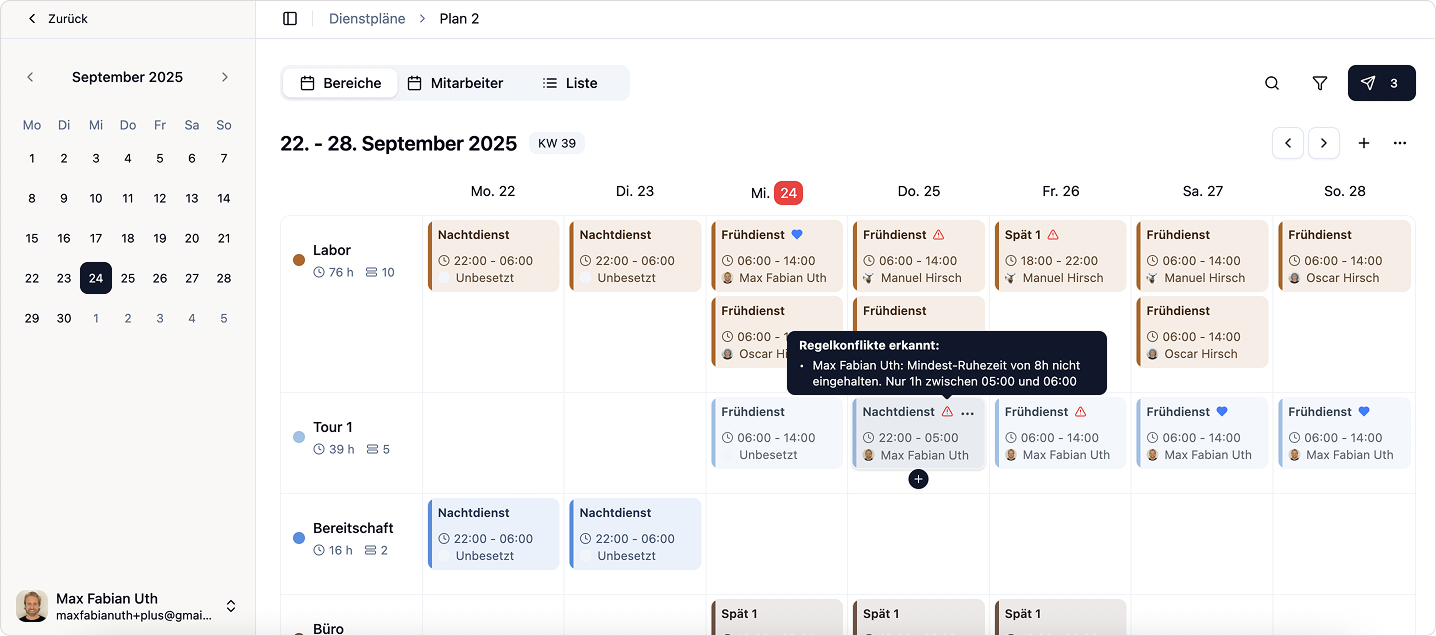 Modern software solutions like medishift revolutionize practice organization through automated processes and intuitive operation.
Workflow Optimization in Daily Practice
Workflow optimization is a continuous process. Observe exactly where wait times occur in your practice, where duplicate work happens, and where information gets lost. Often small adjustments show great impact: an optimized registration process, clear responsibilities for patient intake, or better coordination between treatment and billing.
Integrating Modern Software Solutions
Modern software can revolutionize your practice organization. From automated appointment scheduling to digital patient records to shift planning - the right software supports you in optimizing your practice organization. What's important is that the software fits your practice and team and doesn't create additional complexity. Learn more about modern medishift solutions and how they can optimize your practice organization.
medishift: Your Modern Solution for Practice Organization
As a modern platform for practice organization, medishift understands the challenges of daily practice life. With innovative features and a user-friendly interface, medishift helps optimize your practice organization and make daily work easier for your entire team.
Automated Shift Planning for More Efficiency
medishift's automated shift planning takes over one of the most time-consuming tasks of practice organization. The software considers not only your team's availability but also their preferences. The result: an optimal schedule that meets both practice needs and your employees' wishes.
Digital Vacation Management
medishift's digital vacation management simplifies one of the most time-consuming areas of practice organization. Employees submit vacation requests directly in the app, you instantly see who is already absent during the requested period, and approve or decline with a single click. Approved vacations are automatically reflected in the schedule – so you always maintain oversight.

High quality starts with your organization
Free yourselves from old tables and manual processes.

Avoiding Common Mistakes
When trying to optimize practice organization, the same mistakes keep happening. If you know and avoid these, you save lots of time and frustration.
The 5 Biggest Organization Traps
-
Introducing overly complex systems: Less is often more - a simple but consistently applied organization is better than a complex system no one understands.
-
Not involving the team: Without your team's acceptance, even the best organization system will fail. Involve your employees in the optimization process.
-
No clear responsibilities: When it's unclear who's responsible for what, gaps and duplicate work arise.
-
Lack of flexibility: Too rigid practice organization can become a problem in emergencies or unforeseen situations.
-
Lack of monitoring and adjustment: Once-introduced systems must be regularly reviewed and adjusted as needed.
Successfully Integrating Employees into New Structures
The success of every organization optimization largely depends on team acceptance. Communicate openly about planned changes, explain the benefits, and listen to your employees' feedback. Training and gradual introduction of new processes make the transition easier.
The Path to an Optimally Organized Practice
Optimizing practice organization is a continuous process, not a one-time project. Rely on proven methods, use modern technology sensibly, and never forget the human factor. An optimally organized practice is the result of thoughtful structures, modern tools, and a motivated team. Discover medishift's prices and plans to find the right solution for your practice.
Optimize Practice Organization: 30-Day Plan
Week 1: Analysis
- Day 1-2: Document all current processes
- Day 3-4: Identify the 3 biggest time wasters
- Day 5: Team meeting – gather feedback
Week 2: Planning
- Day 8-9: Design new processes
- Day 10-11: Evaluate software options (book a medishift demo)
- Day 12: Decide on digital tools
Week 3: Implementation
- Day 15-16: Set up software
- Day 17-18: Train the team
- Day 19: Start parallel operation
Week 4: Optimization
- Day 22-25: Collect feedback
- Day 26-28: Fine-tune processes
- Day 29-30: Measure and document results
After 30 days, you'll have a measurably more efficient practice organization.
Free Templates to Get Started
For a quick start with optimized practice organization, check out our template library with practice-proven templates:
- Schedule Template for Medical Practices – Specifically designed for daily practice life
- Vacation Planning Template for Medical Practices – Vacation requests and employee calendars
Further Resources on Practice Organization
- Scheduling in the Practice – Step-by-step to efficient scheduling
- Workforce Capacity Planning – Calculate and optimize staffing needs
- Vacation Planning for Medical Practices – Absence management for your team
- MFA Collective Agreement 2025/2026 – Know rights and obligations
- Practice Organization Software – Software solutions overview
- Practice Management Guide – The complete guide for modern practice leadership
Frequently Asked Questions About Practice Organization
Conclusion: Your Next Steps
Optimizing practice organization is one of the most important investments in your practice's future. Starting with an honest analysis of the current situation through developing a suitable organizational chart to implementing modern software solutions - every step brings you closer to a perfectly organized practice.
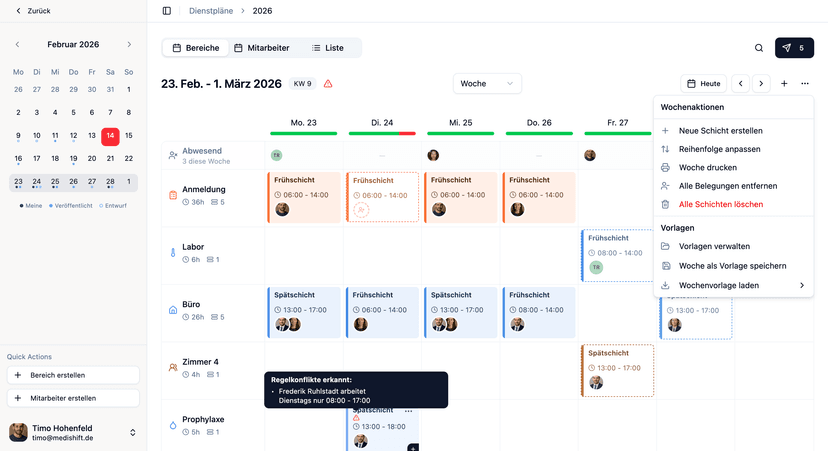
Try Medishift for free now!
- Modern duty planning in just minutes
- Automated workflows for your practice
- Forever free for up to 10 employees
Start with small changes and build on them. With the right strategy and suitable tools like medishift, your practice organization will soon function as smoothly as you've always wished. Find more tips and insights in our blog or learn more about our mission and vision.