Practice Planning: Guide for Practices 2026
Effective practice planning 2026: Discover proven strategies, digital tools, and practical tips for optimal organization of your medical practice operations.
Table of Contents
Thoughtful practice planning is the foundation of every successful medical practice. In a time when healthcare is rapidly changing and demands on medical facilities are constantly increasing, strategic and operational planning is becoming ever more important. Modern medical practices face the challenge of simultaneously ensuring excellent patient care while being economically successful.
Practice planning plays a central role here: It influences not only daily operations but also the long-term development of the practice. Professional planning helps optimize resource usage, control costs, while simultaneously improving the quality of medical care. In this comprehensive guide, we'll show you how to optimally plan, organize, and future-proof your practice.
What is Practice Planning and Why is it So Important?
Practice planning encompasses all strategic and operational considerations necessary for successfully running a medical practice. From initial concept development through personnel planning to long-term growth strategy - solid practice planning lays the foundation for sustainable success.
In modern medicine, it's no longer just about treating patients. Successful practices must today be run like businesses, with business aspects being just as important as medical competence. Systematic practice planning helps optimally connect all these areas and create a harmonious overall system.
Thoughtful practice planning enables optimized patient care and increased efficiency through strategic resource utilization. When all processes are coordinated, wait times for patients are significantly reduced while treatment quality simultaneously increases. Medical staff can focus on their core competencies as administrative tasks are minimized through intelligent planning.
At the same time, it leads to cost reductions through avoiding idle times and optimal resource distribution. Improved work-life balance for the entire team results from predictable working hours and clear structures. This leads to higher employee satisfaction and lower turnover, which in turn ensures continuity of patient care. Long-term, strategic practice planning ensures the practice's future viability in a constantly changing healthcare system.
Fundamentals of Strategic Practice Planning
Successful practice planning begins with thorough location analysis. The demographic development of the region provides insight into future patient numbers and treatment needs. The age structure of the population is particularly relevant, as different age groups require different medical focuses. An aging society needs more geriatric care, for example, while young families increasingly demand pediatric services.
The competitive situation should be analyzed in detail to identify possible market gaps. This involves not just the number of existing practices but also their specializations and service offerings. Transport connections and parking situations are decisive factors for patient satisfaction and should receive special attention in location selection.
Defining your practice concept forms the strategic foundation for all further decisions. Medical focuses should correspond to both your own expertise and local demand. Additional services can represent important differentiating features and open up additional revenue sources. Strategic positioning against competition occurs through special expertise, innovative treatment methods, or exceptional service.
The Perfect Practice Planner 2026: Modern Tools for Efficient Organization
A modern practice planner 2026 must meet the increased demands for flexibility and digitalization. The days of simple paper calendars are long gone - today you need intelligent systems that connect all aspects of your practice organization. This digital transformation is not just a trend but a necessity to remain competitive.
Modern patients today expect digital services like online appointment booking, reminders via SMS or email, and the ability to flexibly reschedule appointments. At the same time, regulatory requirements for documentation and data protection are continuously increasing. A professional practice planner 2026 must handle all these challenges while remaining user-friendly.
Digital practice planners offer automatic appointment optimization that intelligently uses free time slots while considering treatment duration, preparation, and follow-up times. Integrated personnel management enables optimal coordination of qualifications and availability. Mobile availability ensures all team members always have access to current information.
Automatic reminders via SMS, email, or app notifications significantly reduce no-shows and improve planning reliability. Data-based analyses provide valuable insights into patient flows, utilization rates, and optimization potential, enabling informed business decisions.
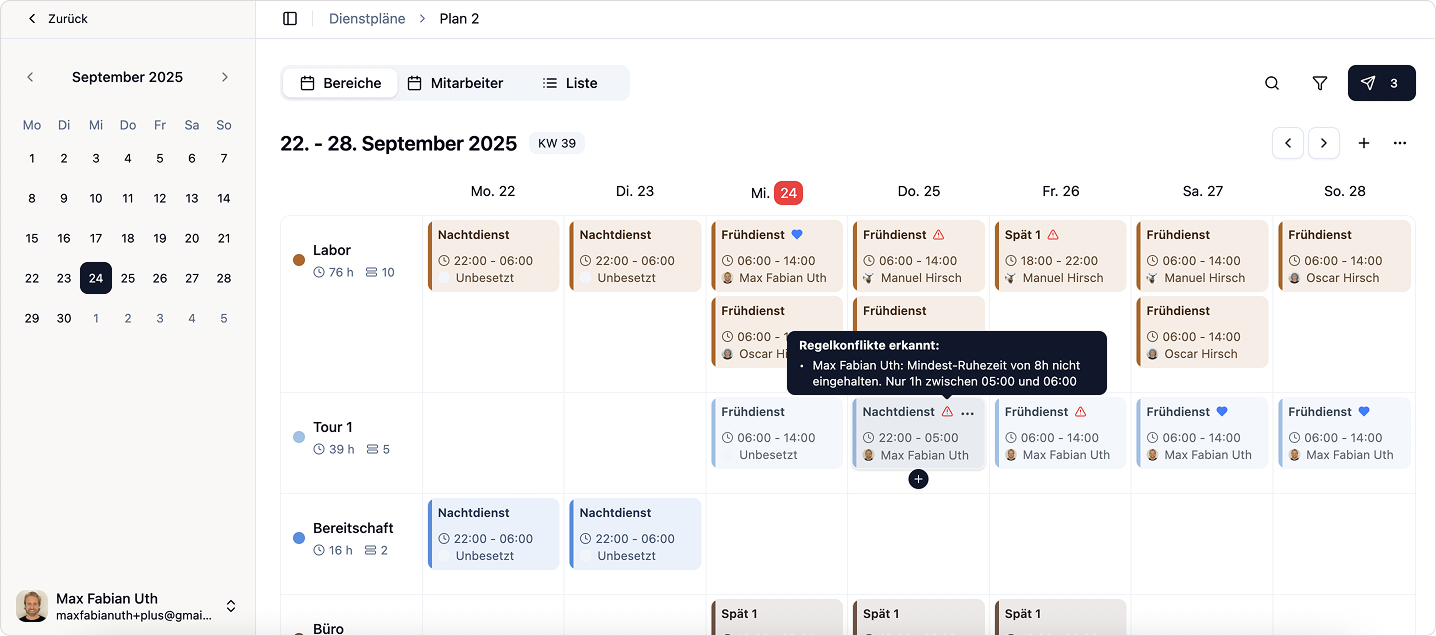
A modern practice planner includes comprehensive appointment management with automatic optimization and intelligent waiting list management. Personnel planning integrates schedule and vacation planning with consideration of individual qualifications and preferences. Resource management centrally coordinates rooms, medical equipment, and material inventories, ensuring optimal utilization of all available resources.
Operational Practice Planning: The Perfect Practice Schedule in Detail
An efficient practice schedule structures appointments in thoughtful blocks that consider the natural biorhythm of doctors and patients. Mornings are suitable for routine examinations and check-ups, as both sides are usually fresh and focused at this time. Lunchtime can be optimally used for administrative tasks, phone calls, and team meetings, while afternoons lend themselves to more complex treatments and detailed consultations.
Essential are buffer times of 15-20% of daily capacity for emergencies and unforeseen situations. This apparent "idle time" is actually an important quality factor that reduces stress and enables flexibility. Additionally, short breaks between appointments should be planned to ensure proper follow-up and avoid time pressure when appointments run over.
Structured weekly planning with fixed times for certain treatment types creates routine and predictability. Patients can adjust to this, and staff can prepare specifically for certain appointments. Team meetings, training, and administrative tasks should be firmly integrated into the weekly rhythm to ensure continuous development and smooth organization.
Calendar Practice Planner: Integration and Synchronization
Central calendar systems offer the crucial advantage of a unified data basis that prevents double bookings and always provides all parties with current information. Administration is significantly simplified as only one system needs to be maintained. Alternatively, intelligent synchronization of different systems enables flexible linking of practice and private calendars with automatic data matching and thoughtful backup strategies.
When choosing a calendar, aspects such as user-friendliness, customizability, and integration possibilities with other practice systems should also be considered. Seamless connection to patient management systems and billing software saves time and reduces error sources.
Mobile practice planner apps enable appointment access from anywhere at any time. Push notifications inform about important changes or upcoming appointments, while offline functionality ensures access to critical information even with weak internet connections. This flexibility is absolutely essential in the medical field with its spontaneous changes and emergencies.
Personnel Planning in the Medical Practice
Personnel planning is a complex process encompassing both quantitative and qualitative aspects. Quantitative planning is based on analysis of patient volume, average treatment times, and resulting working hours. Substitute arrangements, vacation times, and training must also be considered to ensure continuous patient care.
Qualitative personnel planning focuses on qualifications, competencies, and development opportunities. Each employee should be optimally deployed according to their abilities while simultaneously identifying and promoting training needs. Forward-looking career development planning motivates the team and contributes to long-term retention of qualified professionals.
Optimal working hours result from balancing individual employee wishes with operational necessities. Transparent and fair distribution of weekend and on-call duties is essential for a harmonious work climate. Flexibility for private obligations such as childcare or training shows modern leadership style and significantly increases employee satisfaction and retention.
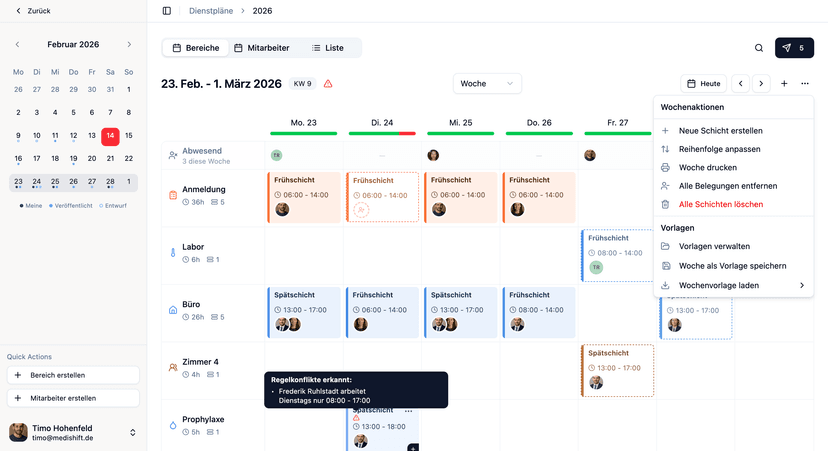

Try Medishift for free now!
- Modern duty planning in just minutes
- Automated workflows for your practice
- Forever free for up to 10 employees
Practice Planner 2026: Future Trends and Developments
AI technologies are revolutionizing practice planning through the use of predictive analytics that enable precise predictions of patient volume. These systems consider seasonal fluctuations, historical trends, and even external factors such as weather conditions or epidemiological developments. Intelligent appointment optimization automatically adapts planning to recognized patterns, maximizing both patient satisfaction and practice efficiency.
Automated processes with self-learning algorithms continuously optimize themselves and adapt to each practice's specific conditions. They can predict appointment cancellations, suggest optimal appointment sequences, and even recommend personalized treatment paths. These technologies reduce wait times, maximize utilization, and simultaneously relieve administrative staff.
Telemedicine requires completely new planning approaches, as video consultations have different temporal and technical requirements than traditional in-person appointments. Hybrid appointments combining digital and personal elements present practice planners with new challenges in resource coordination. Different billing models for digital services must be seamlessly integrated into modern planning tools to ensure correct documentation and billing.
Technical Infrastructure for Modern Practice Planning
Software selection is a strategic decision that should be made carefully. User-friendliness is paramount, as even less tech-savvy employees must be able to use the system without problems. Comprehensive integration possibilities with existing systems are essential to avoid data silos and ensure seamless information flow.
Scalability for future growth is another decisive factor, so the software functions optimally even with practice expansions or changed requirements. Highest data protection and security standards are indispensable, as highly sensitive patient data is processed in the practice.
A thoughtful implementation strategy minimizes risks and interruptions. Gradual introduction of new systems allows the team to gradually get used to the new software. Comprehensive employee training should begin before first use and be continuously continued. Parallel operation during the transition phase creates security and allows quick fallback to proven systems in case of problems.
With digital practice planning, the highest security standards must be maintained. GDPR-compliant data processing is not only legally required but also the trust basis for patients. Regular security updates protect against new threats, while thoughtful backup strategies and emergency plans ensure continuity of practice planning even with technical problems.
Quality Management in Practice Planning
Successful practice planning is a continuous improvement process requiring regular evaluation and adjustment. Systematic monitoring of important key figures forms the basis for data-driven decisions. Wait times should not only be measured but also tracked in their development to recognize trends early.
Patient satisfaction is a complex indicator encompassing various aspects: from appointment scheduling through wait times to perceived treatment quality. Utilization rates show whether resources are being optimally used, while employee satisfaction is an important early indicator for personnel problems.
Regular feedback systems through structured patient surveys provide valuable insights into improvement potential. Employee conversations reveal internal optimization possibilities and promote team engagement. External benchmarking with other practices or industry standards helps realistically assess your own position and identify best practices.
Frequently Asked Questions About Practice Planning
Conclusion: Successful Practice Planning as Key to Success
Thoughtful practice planning is more than just appointment scheduling and personnel organization - it's the strategic basis for a successful, future-proof medical practice. The right balance between medical excellence and business efficiency determines long-term success in an increasingly competitive healthcare market.
With the right tools, a clear strategy, and willingness for continuous improvement, you lay the foundation for sustainable success. This is not just about implementing new technologies but about a holistic approach that considers all aspects of practice management.
Investment in modern practice planning tools pays off not only through increased efficiency and cost savings but also measurably improves patient and employee satisfaction. Shorter wait times, better predictability, and optimized processes create win-win situations for all involved.
In a time of digital change in healthcare, professional practice planning is indispensable for long-term success. Start today with optimizing your practice planning and use the possibilities that modern technologies offer. Your practice, your team, and your patients will thank you.